Email list growth · 6 min read
Klaviyo popup strategy: grow an ecommerce email list without sacrificing the shopping experience
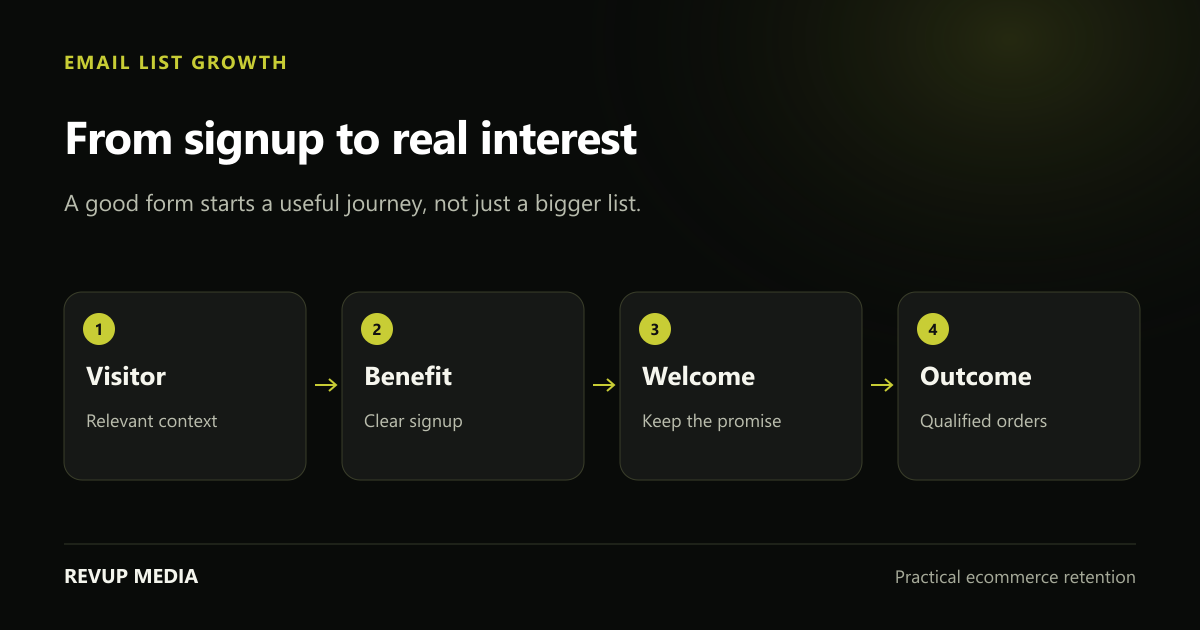
A Klaviyo popup earns its place when it offers something useful and makes subscribing easy. The objective is a qualified audience that wants to hear from the brand, not the highest possible form-submit rate at any cost.
Start here
Evaluate the journey after the form: eligible signups, delivery of the promised benefit, clicks, orders and unsubscribes. Form conversion alone cannot tell you whether list growth is valuable.
Choose a benefit that fits the visitor’s decision
Discounts can work, but they are only one signup promise. Early access, a useful buying guide, product education or a relevant launch update may fit the brand better. Choose a benefit the team can deliver consistently and afford commercially.
Make the offer concrete. “Get updates” gives a visitor little reason to exchange an email address. “Get the guide to choosing your first kit” explains the value, provided that guide exists. If a discount is available only for a first order, say so before submission rather than hiding the eligibility later.
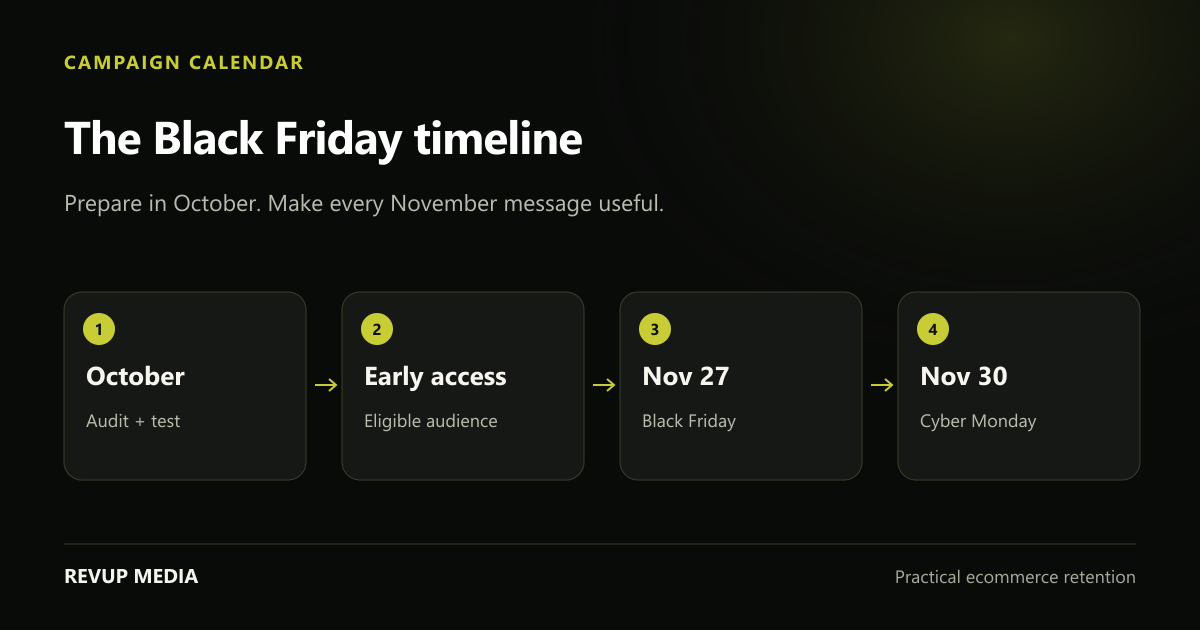
For Black Friday, distinguish an interest list from genuine early access. If subscribers get access before the public sale, state the window. If they only receive a notification, describe that accurately. A clear promise attracts people whose expectations you can meet.
Use timing and targeting to respect the page experience
Do not assume an immediate full-screen interruption is right for every visitor. Someone arriving from a product ad may need to see the product first. A content reader may want the article before deciding whether the brand is relevant. A returning subscriber may not need the same signup request at all.
Review the conditions available in your form setup and test them on real devices. Decide where the form appears, which visitors are eligible and how often it can reappear after dismissal. Confirm that your conditions behave as intended rather than relying only on the editor’s explanation.
Avoid trapping the visitor. The close control should be visible and usable. On mobile, account for the keyboard and screen height. Important product details, checkout controls and accessibility should remain usable. A popup that produces signups by preventing normal browsing creates the wrong kind of growth.
Keep the form simple and the channel choices explicit
Ask for information that changes the experience or is needed for subscription. Email may be enough for the first step. Product preferences can help when they meaningfully change recommendations, but every extra field adds effort and another promise about how the data will be used.
If you collect phone numbers, make the SMS signup experience distinct and accurate. Do not infer SMS permission from email subscription or make the channel choice confusing. Use the platform’s appropriate consent components and current guidance for the markets you serve.
Write buttons that explain the action: receiving the benefit, joining the relevant list or requesting the guide. Use a confirmation state that tells people what happens next. A visitor should understand whether they need to check email, confirm subscription or copy a code before returning to shopping.
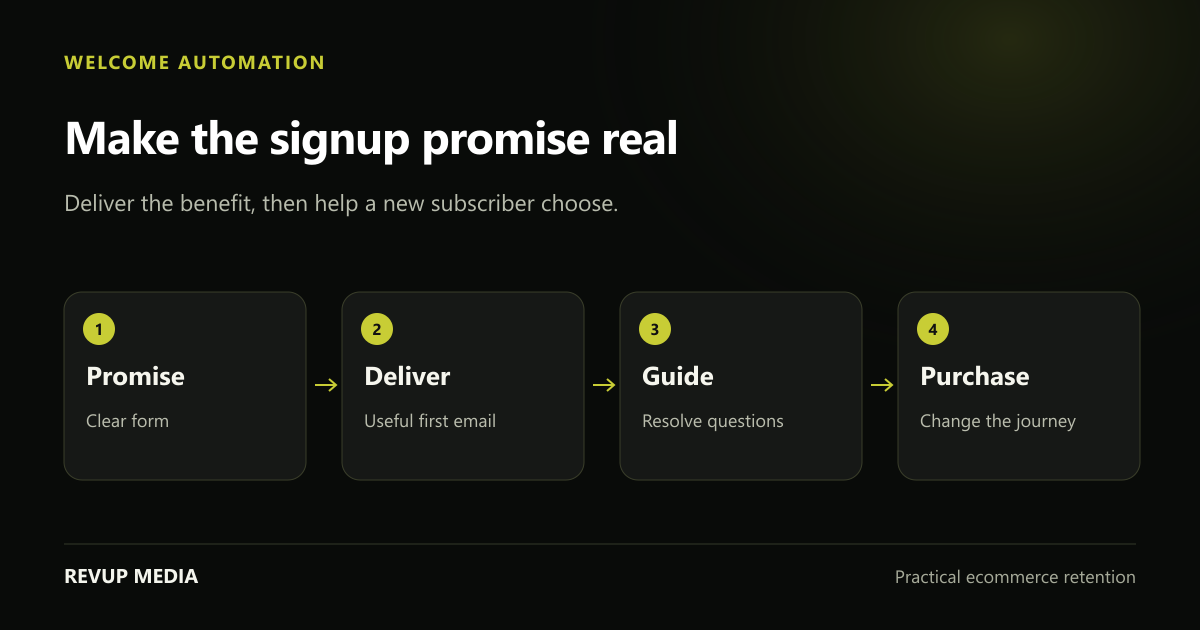
Connect the form to a matching welcome experience
The form and welcome flow are one customer journey. Check the destination list, signup-source data and first email before publishing the form. A successful submission that routes to the wrong list can silently leave the subscriber waiting.
Test the complete path with a new profile. Confirm that the message arrives under the intended opt-in conditions and that the benefit works. For a code, test qualifying and excluded products in the cart. For a guide, open the resource on a phone. For early access, verify the expected campaign audience.
Review existing-subscriber behaviour. If a subscriber submits again, the experience should not promise an email sequence that will not restart under your flow settings. The success state can help provide a clear next step, but it must remain consistent with offer eligibility.
Run one-variable tests and measure downstream quality
Choose a hypothesis that matters: a product guide will attract more qualified prospects than a generic discount, or a delayed display will reduce shopping interruption without materially reducing useful signups. Begin with a manageable number of variations and keep other conditions consistent.
Klaviyo supports form A/B testing and recommends isolating a variable so the result is interpretable. Record which audience saw each version. If traffic source changes halfway through the test, take that into account rather than treating the comparison as perfectly controlled.
Track form views and submissions, then follow the resulting cohorts through the welcome journey. Compare clicks, first orders, unsubscribes and contribution where you can reliably link outcomes. A higher signup rate can still be a worse commercial result if it attracts people interested only in a benefit they never use.
| Test variable | Question | Useful outcome beyond signups |
|---|---|---|
| Offer | Guide versus discount for a relevant visitor | Qualified clicks and first orders |
| Timing | Earlier versus later display | Shopping behaviour and subscriber quality |
| Copy | Specific benefit versus general updates | Welcome engagement and unsubscribes |
| Fields | Email only versus a relevant preference | Completion and usefulness of personalisation |
Source and context: Klaviyo: how to A/B test a signup form ↗. Klaviyo documents form variations and recommends testing one variable at a time. The downstream quality checks here add a store-level view beyond the form result.
Maintain forms as offers and campaigns change
Assign each live form an owner and review date. Check its promise, eligibility, destination audience and suppression conditions. Seasonal forms need an end date and a planned replacement so a December visitor does not see a Black Friday promise.
Review performance by device and traffic source. A healthy desktop average can hide a poor mobile experience. A sudden change in submissions may come from a new traffic mix, a display-rule change or a technical problem rather than the headline copy.
Keep the strongest learning in a simple record. Document what changed, what happened and what remains uncertain. Build list growth around clear customer value and reliable follow-through. That makes the audience more useful for campaigns, flows and long-term retention.
- Benefit is specific and deliverable.
- Dismissal and mobile keyboard behaviour work.
- New and existing subscriber paths have been checked.
- Seasonal offers have a restoration date and owner.
Common questions
What is a good Klaviyo popup conversion rate?
Compare a consistent definition against your own device, traffic and offer mix. A broad benchmark can provide context, but subscriber quality and later buying behaviour determine whether the form helps your store.
Should I collect email and SMS in the same signup experience?
You can design a coordinated experience, but each channel needs clear eligibility and consent handling. Test the complete journey and avoid treating one channel’s signup as permission for the other.
Need a plan for your store?
Turn the next useful idea into action.
We review your campaigns, flows, signup experience and customer journey to identify the work worth doing first.
Book Your Free Audit →Explore ecommerce email list growth →