Black Friday · 6 min read
Black Friday email calendar for 2026: what to send from October through Cyber Monday
A useful Black Friday email calendar tells your team why each message exists, who receives it, and what must be ready before it sends. The following schedule is a planning template you can adapt to your actual sale dates and customer behaviour.
Start here
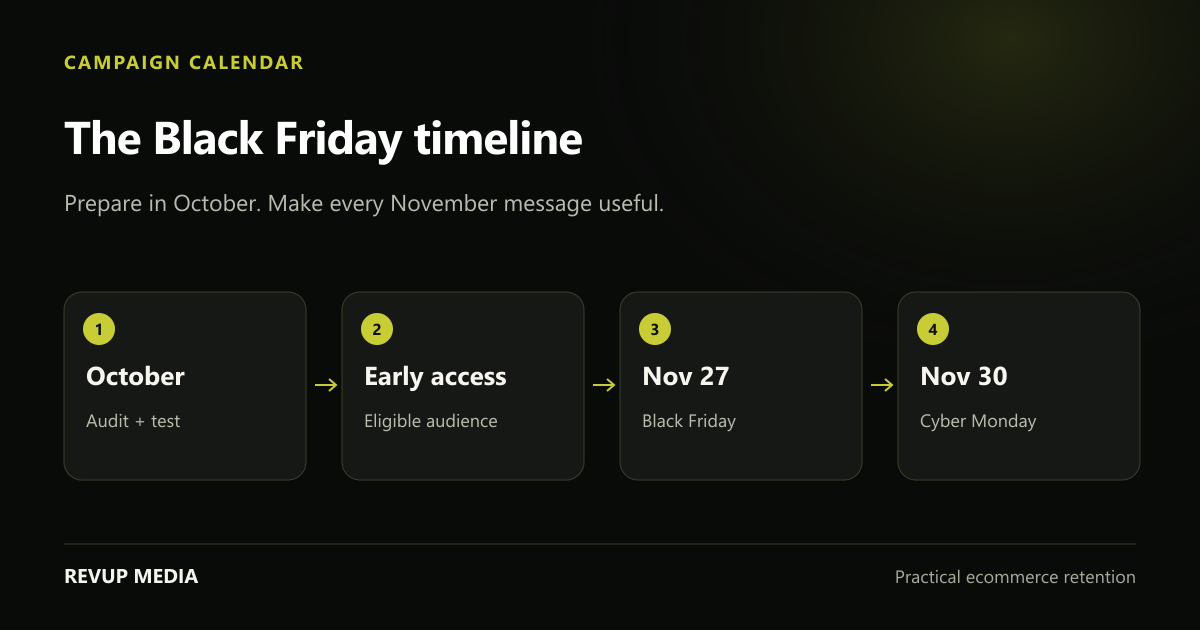
Black Friday falls on November 27, 2026, and Cyber Monday on November 30. Mark the exact opening and closing times of your own promotion, including the time zone.
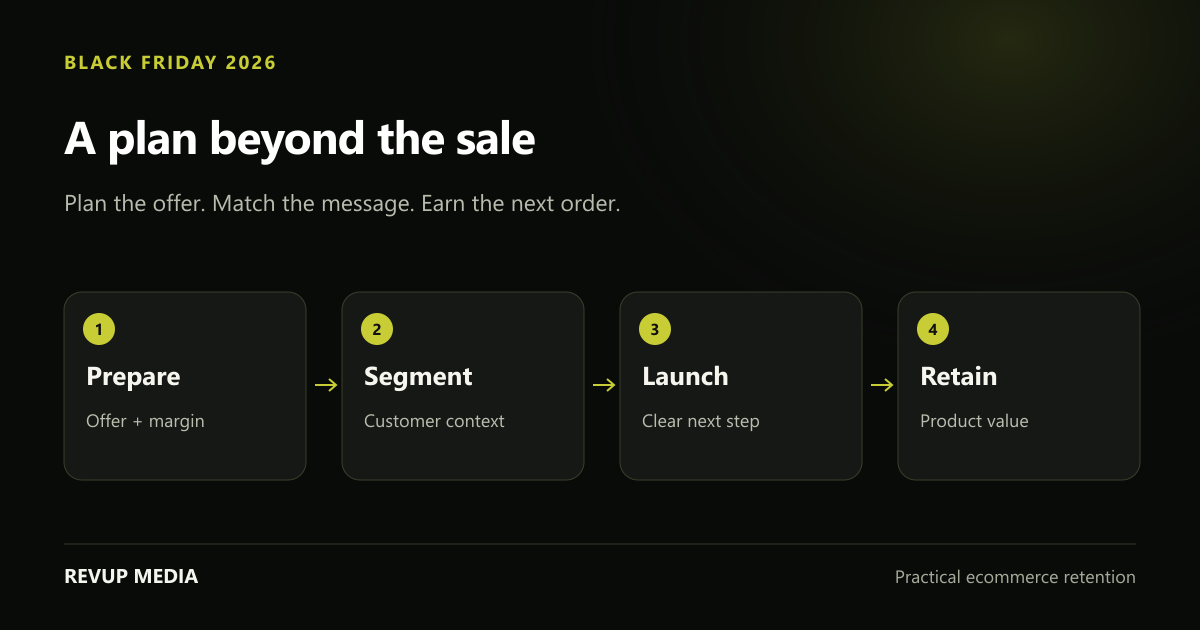
Start with the offer calendar, then the email calendar
Your promotion may open before Black Friday or end before Cyber Monday. Put those decisions on the calendar first. Record product eligibility, stock allocation, discount rules and fulfilment commitments next to each promotional period. Email production is much easier when the offer is no longer moving.
For every proposed send, write the audience, primary benefit, landing page, exclusion rules, approval owner and intended decision. “Black Friday reminder” is too vague. “Help engaged first-time shoppers choose one of three entry products before the public offer closes” is useful direction for copy and design.
Separate a customer’s automated messages from the campaign calendar. A subscriber can receive a welcome message, a checkout reminder and a scheduled promotion on the same day. Your team needs to see that combined experience before agreeing to another broadcast.
October: make the system ready for extra attention
Use the first half of October for a focused audit. Confirm store events, sender setup, signup routing and purchase exits. Review last year’s campaigns if you have comparable data, but account for changes in price, inventory and acquisition mix. If this is your first Black Friday, treat early decisions as hypotheses rather than proven rules.
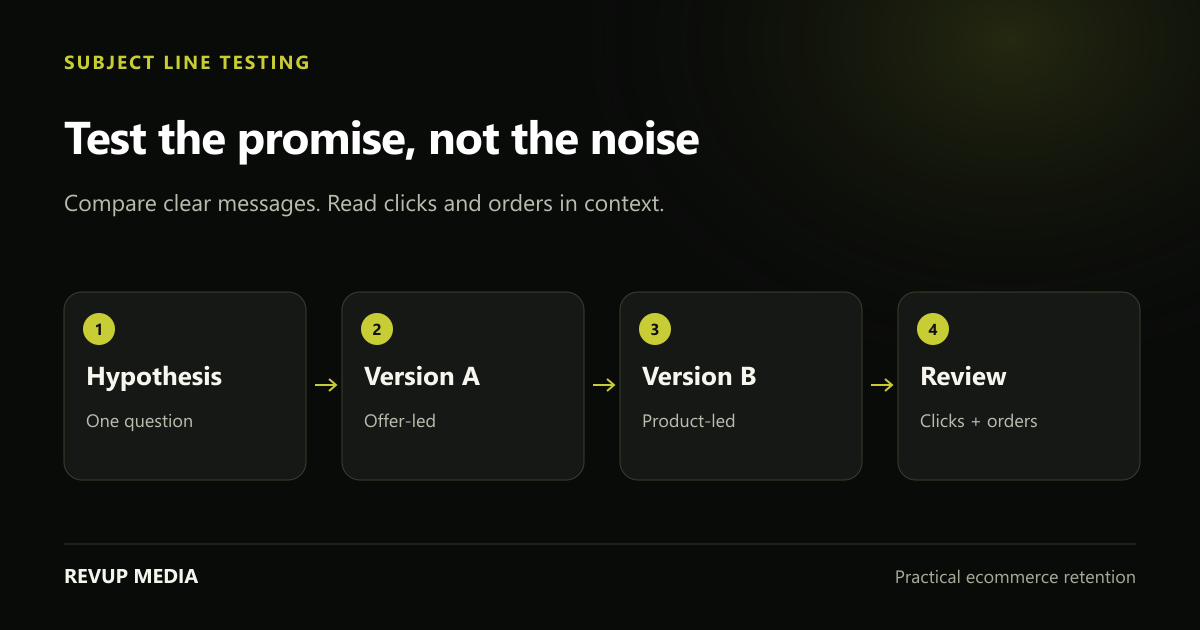
In the second half, test one meaningful creative or offer question at a time. You could compare a bundle explanation against an individual-product explanation for the same eligible audience. Keep the landing experience consistent with each version, and define success before you send.
Collect early-access interest with a clear promise. Do not make people subscribe to a vague “VIP” list if everyone will receive the same offer at the same moment. Route signup sources correctly and let the welcome message explain what happens next.
| Period | Work to complete | Exit condition |
|---|---|---|
| October 1–11 | Audit flows, tracking, eligibility and offers | Critical errors assigned and corrected |
| October 12–25 | Test creative, capture interest, draft campaigns | Offer and audience decisions documented |
| October 26–November 8 | Build, approve and preview the core sequence | Links, codes and customer paths verified |
Early November: help people choose before asking them to rush
Education, product comparison and gift guidance can reduce uncertainty ahead of the sale. Choose one question customers already ask: Which size should I buy? Which bundle is the best starting point? What is suitable for a first-time user? Answer it with clear products and practical details.
Do not assume every subscriber shops for gifts. If you can reliably distinguish self-purchase from gifting interest, use different examples. Otherwise, give customers an easy way to choose the relevant collection. Avoid adding several preference questions simply to enrich a database.
When you tease the sale, be precise about what is confirmed. Explain the opening date and what early-access subscribers will receive. Avoid promising the “lowest price ever” unless you have the evidence and operational approval to support it. A useful teaser creates a reason to return without making claims you may need to retract.
Sale week: use a sequence with distinct jobs
Build the week around the actual customer decisions. Early access rewards an eligible group. Launch explains the full offer. A product-led follow-up helps people choose. A deadline reminder explains a real ending. Cyber Monday needs its own customer reason, even if the commercial terms are similar.
Treat the following dates as a worksheet, not a requirement to send every row. Adjust sending times using your audience history and recipient time zones where appropriate. A deadline tied to one store time zone must be stated consistently, even if messages arrive at different local times.
Review overlapping campaigns before scheduling. If you send one message to VIPs and another to all engaged subscribers, decide whether VIPs should receive both. If a customer purchases, determine which subsequent messages remain relevant rather than automatically removing them from every sale-related communication.
| Date | Possible campaign job | Main audience decision |
|---|---|---|
| November 23–26 | Genuine early access or final preparation | Is this useful to me before the public sale? |
| November 27 | Black Friday launch | What is the offer and what should I buy? |
| November 28–29 | Product guidance or objection resolution | Which option fits my need? |
| November 30 | Cyber Monday and a true closing reminder | Does this offer close at the stated time? |
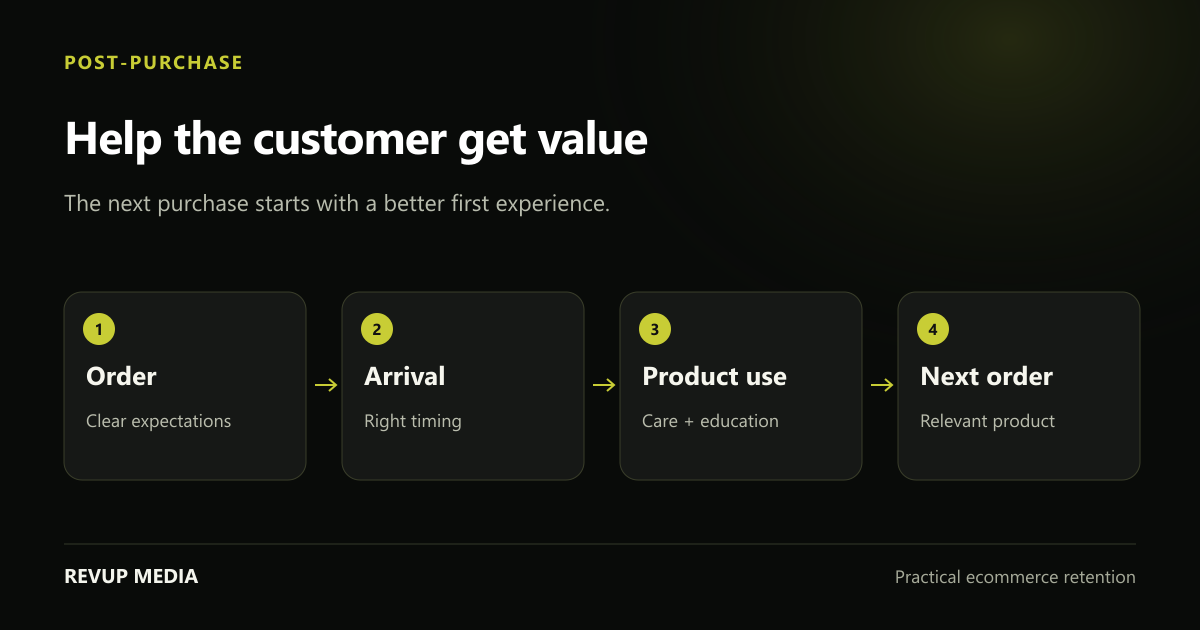
| December 1 onward | Delivery guidance and product onboarding | What happens after my order? |
Source and context: Klaviyo’s Black Friday sending guide ↗. The seasonal guide discusses staged preparation and send timing. The dated worksheet above is an original planning example; it is not a forecast of the best-performing send times for your store.
Leave operating space between approval and sending
Build a short release checklist into the calendar. Confirm the exact price and code, preview dynamic products, test every destination, check recent-purchaser handling and send a mobile test. The person approving the creative should see the landing page too.
Create contingency copy for stock changes or a paused product. Decide who can update a collection, stop a queued campaign or answer customer questions. If fulfilment capacity changes, revise the message before continuing to promote a delivery promise the operations team cannot support.
Keep a record of what actually sent, not only what was planned. Add final recipient count, exclusions, send time and any last-minute changes. That record makes the performance review useful and prevents next year’s planning from relying on incomplete memory.
Put the review and flow restoration on the calendar
Reserve time to restore evergreen flow content, standard timing and signup offers after the promotion. Check scheduled reminders for stale deadlines and verify that expired codes cannot accidentally appear in a new subscriber’s experience.
Review results in stages. First identify delivery, link or stock problems. Then compare message performance using consistent definitions and attribution settings. Later, review repeat orders from the Black Friday cohort, allowing enough time for your product’s buying cycle.
Document what you will keep, change and stop. A calendar becomes an operating asset when it captures decisions and evidence, not when it merely gets fuller each year. If a product guide generated meaningful buying activity with fewer complaints than another reminder, that is a useful lesson for the next seasonal event.
Common questions
What day is Black Friday in 2026?
Black Friday is Friday, November 27, 2026. Cyber Monday is Monday, November 30, 2026. Your store can choose its own promotional window.
Should I schedule all Black Friday campaigns in advance?
Prepare and approve the core sequence early, but preserve the ability to pause or adjust messages if stock, fulfilment or audience response changes.
Need a plan for your store?
Turn the next useful idea into action.
We review your campaigns, flows, signup experience and customer journey to identify the work worth doing first.
Book Your Free Audit →Plan your campaigns with RevUp Media →