Choosing an agency · 9 min read
How to choose an ecommerce email marketing agency: scope, evidence and the questions to ask
The best email marketing agency for your store is the one that can explain the problem it will solve, the work it will deliver and the evidence it will use to judge progress. A long list of services or a large revenue figure is only a starting point. Use this guide to compare proposals against the customer journey and capacity of your own ecommerce team.
Start here
Define the job before comparing agencies. Then check the proposed deliverables, relevant work, measurement approach and ownership terms against that job.
Start with the problem your store needs to solve
An agency search often begins with a broad request for more email revenue. Make that request more concrete before asking for proposals. Your store may be missing welcome and abandonment flows, struggling to produce campaigns regularly, collecting subscribers who never receive the promised benefit, or needing a better view of its existing performance. These are different jobs.
Write a short brief that covers the store platform, email platform, main markets, product range, current campaign rhythm and the customer moments you want to improve. Identify what your internal team already does well and where outside help is needed. An agency that takes over campaign production is a different fit from one hired to repair a specific automation journey.
Include constraints that affect the work: the person who approves offers, how quickly creative can be reviewed, whether product photography is available and whether the store has reliable event data. A useful proposal should respond to those constraints rather than assume every account needs the same package.
- What is missing or unclear in the current customer journey?
- Which work should the agency own, and which work stays with your team?
- What information would show that the chosen problem is improving?
Compare deliverables rather than service labels
Strategy, design and optimisation can mean different things in different proposals. Ask what you will actually receive. For a flow project, that could include a lifecycle map, agreed messages, copy and design, account implementation, testing and a review after launch. For campaign management, it could include a calendar, audience direction, production, approvals and performance review.
Clarify quantities and responsibilities in the proposal itself. Do not assume that email design includes writing every word, that a strategy project includes implementation, or that an account audit includes fixing every issue it identifies. The same principle applies to SMS: specify whether the work covers strategy, capture, production or ongoing sending.
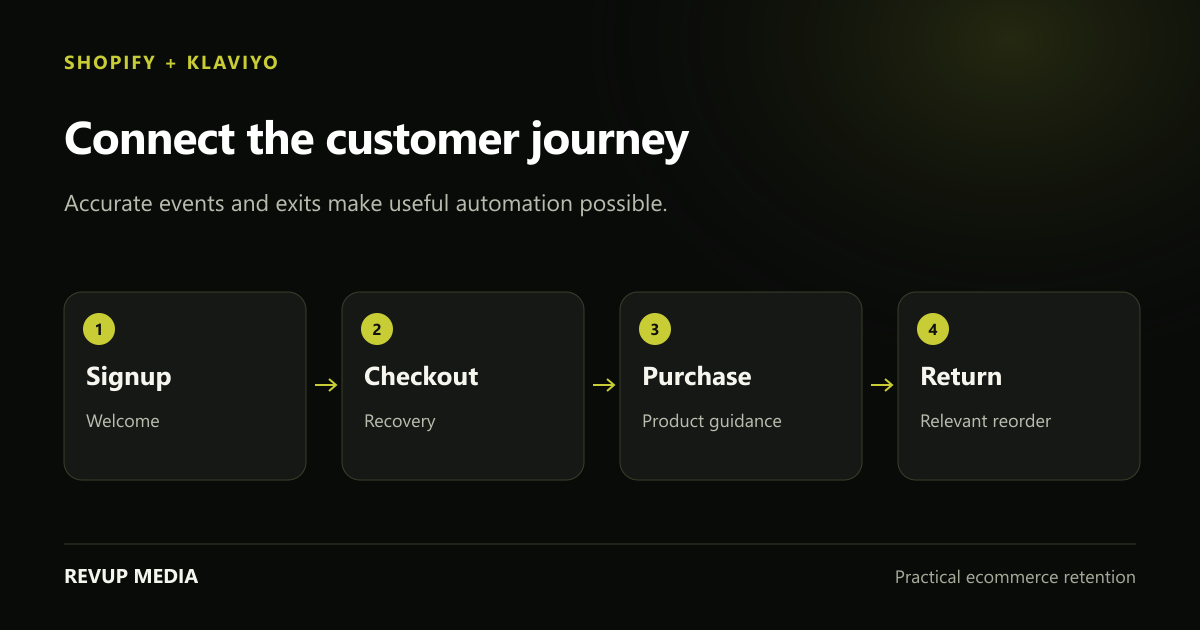
Ask how existing flows and campaigns will be coordinated. A new promotion can conflict with a welcome offer or continue after a customer has purchased. A plan that connects audience rules, customer exits and offer terms tells you more than a promise to send more messages.
| Workstream | What to clarify | Evidence to request |
|---|---|---|
| Lifecycle flows | Journeys, messages, implementation and testing included | A flow map and relevant before-and-after project |
| Campaigns | Planning, copy, design, audiences and approval responsibilities | Campaign examples with an explanation of the customer action |
| List growth | Forms, benefit, routing and welcome experience | A documented signup-to-first-message journey |
| Reporting | Metrics, time periods and review cadence | An example report with clear definitions and next actions |
Read case studies with the scope and time period in view
A case study is most useful when it explains the starting situation, the agency work and the evidence available afterwards. Compare that scope with the job in your brief. A visually strong campaign portfolio may be relevant to your production problem, while a documented flow implementation may be more relevant to an automation gap.
For example, our US Boot project describes a store preparing for a media feature without email automations or popup forms in place. The published work includes five Klaviyo flows, campaign support and capture, with before-and-after reporting. Its five-day implementation is context for that specific project; it should not be treated as the delivery promise for every store.
When reviewing another agency, ask the same questions. Was the work a one-time setup or ongoing management? What platform was used? What data is shown? Are dates and the agency contribution clear? Prefer a smaller result you can understand over a much larger number whose scope is unclear.
Source and context: RevUp Media: US Boot case study ↗. A first-party example of a defined flow, campaign and capture implementation with supporting Klaviyo dashboards.
Separate attributed revenue from proof of additional growth
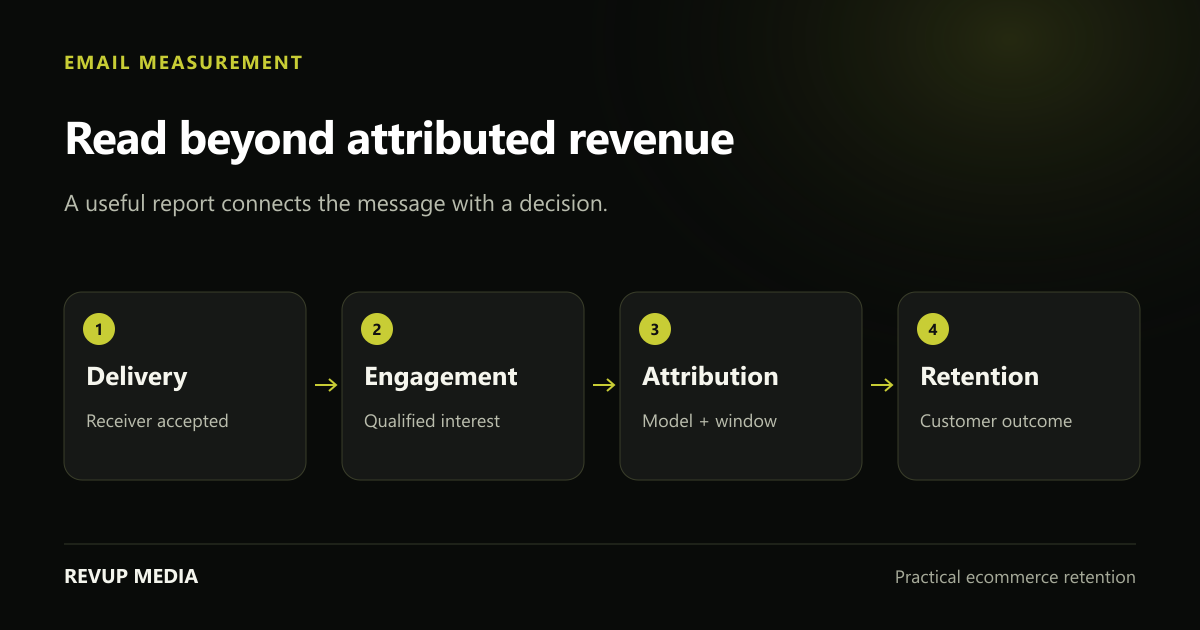
Email platforms report revenue according to their attribution settings. That is useful information about the account, but an attributed sale is not automatically a sale that would never have happened without the message. Ask agencies how they interpret the report, which time period it covers and what other store indicators they review alongside it.
Our Moments With Him revenue snapshot reports $111,050.73 in attributed revenue and a 35.44% share of store revenue for August 17–September 16, 2026. Those figures describe the displayed reporting period. They are not a forecast for another client or a measurement of incremental revenue created by the agency. That distinction matters when comparing results from stores of different sizes.
A useful review should connect the numbers with an action. If a flow receives very few entries, routing may deserve attention before a design test. If customers click but do not buy, product choice and the destination may be relevant. Ask what the agency would investigate rather than judging a report only by its revenue headline.
Source and context: RevUp Media: Moments With Him revenue snapshot ↗. The published result identifies the reporting dates and labels revenue as attributed.
Ask how onboarding, approvals and quality checks work
Good creative depends on a workable approval process. Before choosing an agency, identify who supplies product information, approves claims and offers, reviews copy and accepts the final send. Agree where feedback happens and what an agency does if a promotion changes after the creative is approved.
Ask for an explanation of the checks before a campaign or flow goes live. Relevant checks include the audience, offer eligibility, customer exits, dynamic products, mobile layout, links and the store destination. A finished design does not establish that the account logic is correct.
For a remote relationship, agree the communication channel, review cadence and practical overlap between working hours. Global delivery is useful only when the people making decisions can keep the work moving. The proposal should leave both teams clear about the next step, rather than relying on constant urgent messages.
Clarify platform access and ownership before committing
Ask who owns the email account, source designs, copy, reporting and completed automation work. Clarify what will be handed over if the engagement ends, including documentation your team needs to maintain the program. Your team should understand the live setup rather than depend on an undocumented process.
Use the account access method appropriate to the platform and agreed responsibilities. A discovery call does not require casually sharing account passwords. Identify the people who need access and the scope of their work through the normal account process.
Also discuss who maintains promotions and flow offers over time. A welcome discount, seasonal message or product link can become outdated after the original project ends. Make maintenance responsibility explicit so the customer experience continues to match the store.
Compare price against the agreed scope
A quote is only comparable when its scope is clear. Compare the work included, any limits on campaigns or flows, review responsibilities, contract duration and the circumstances that change the price. Keep the agency fee separate from email-platform subscriptions, SMS usage and any other agreed third-party costs.
RevUp Media does not publish a universal rate for every account on its service pages. Use the discovery call to establish the current setup and needed work, then assess the proposed cost against the deliverables. Avoid filling an unknown price with an assumption based on another agency or a different client project.
A smaller initial project can make sense when the first priority is well defined. Ongoing management can make sense when the store needs recurring planning and production. Choose the engagement that fits the actual workload and review the agreed progress before adding more scope.
Use the same questions for every agency on your shortlist
Send each agency the same brief and ask it to explain the first priorities. Compare how directly the answers address your store, how clearly the proposal defines ownership and how well the evidence matches the promised work. A useful conversation should help you make a decision even before the engagement begins.
If you are considering RevUp Media, start with the service page that matches your immediate need and the linked case studies. Bring your current account setup, main markets and the problem you want to solve to the free discovery call. The next step is a defined scope, not a promise that one fixed playbook will work for every ecommerce brand.
- What would you review first, and why?
- What exactly is included in the proposal?
- Which case study most closely matches this work?
- How will you interpret attribution and overall store performance?
- Who approves sends and maintains offers after launch?
- What stays in our account, and what is handed over?
Common questions
What is the best email marketing agency for an ecommerce store?
The best fit depends on the store platform, customer journey, production needs and internal team. Compare a defined scope, relevant project evidence and a clear measurement approach rather than relying on a universal ranking.
Should I choose a Klaviyo agency or a general marketing agency?
If the main work is inside a Klaviyo account, ask for evidence of flow, campaign, segmentation and implementation work on that platform. If the engagement spans other channels, clarify which team owns each part and how the work is coordinated.
Can I work with an email marketing agency in another country?
Yes, provided the agency can support the store platforms and target markets in your scope. Agree communication, approvals, working-hour overlap and the responsibilities for language, offers and channel requirements before starting.
Need a plan for your store?
Turn the next useful idea into action.
We review your campaigns, flows, signup experience and customer journey to identify the work worth doing first.
Book Your Free Audit →Explore ecommerce email marketing services →